
KATHARINE WATSON
The Woman Unearthing Christchurch’s History
Katharine Watson is an archaeologist who, over several decades, has helped recover more than half a million artefacts from across Christchurch. The earthquakes created a rare opportunity to excavate many newly vacant sites in the central city, places where buildings once stood but were demolished, revealing layers of history beneath.


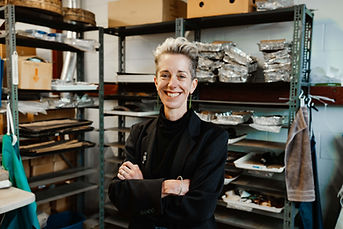
Katharine speaks with passion about her work, emphasising that archaeology is ultimately about people, understanding the lives lived in the past and helping people today connect with their stories.
Before any excavation begins, she undertakes extensive research: who lived on the site, what their daily lives were like, how many children they had, and what historical records, such as old newspapers, can reveal. All this background work provides vital context for interpreting the artefacts uncovered.
Choosing the Archaeologist’s Path
We were curious about how someone chooses a path like archaeology, and for Katharine, the decision came surprisingly early, at just 13 years old. One day in her 3rd Form math class, the teacher remarked that everyone should already know what they wanted to do with the rest of their lives. Katharine went home that evening, reflected on that challenge, decided archaeology was for her, and simply set her course.
Early Career and First Digs
Katharine studied archaeology at the University of Otago, completing both her undergraduate degree and Master’s. She

later moved to Christchurch and began working at Canterbury Museum in 2000. It was the museum’s archaeology curator, Chris Jacomb, who encouraged her to undertake the archaeological work on the site where the Christchurch Art Gallery would later be built. This became her first major dig, and through her research, she discovered that one corner of the site had once been home to Mrs Rose’s Preparatory School, Christchurch, in 1880.
When asked whether any of her city excavations had revealed unusual findings, Katharine recalled a memorable site on Kilmore Street near the fire station. A group of women had occupied the property, and the excavation uncovered a surprisingly large number of alcohol bottles. Katharine is quick to point out that this doesn’t necessarily mean the occupants were heavy drinkers, as the bottles may well have been reused for other purposes.
Recording a City’s Past
With so many artefacts and such rich supporting research, the team has created a remarkable online collection: The Museum of Archaeology Ōtautahi (https://museumofarchaeology.org/). This digital museum, born from the extensive post-earthquake demolition, recovery, and rebuild work, captures stories that illuminate broader themes such as colonialism and capitalism. It stands as an evolving record of the city’s past and its people, as revealed through archaeology.
Looking ahead, Katharine’s long-term ambition is to establish a physical archaeology museum in the central city. She believes the heart of Christchurch holds special significance as the place where so many of the city’s earliest stories began.
Sharing the Stories with the Community
The team has also partnered with the Christchurch Cathedral Reinstatement project to create Cathedral Square Unearthed, a new exhibition showcasing objects uncovered during the post-earthquake archaeological excavations and will be located inside the Christ Church Cathedral. Timed to coincide with the 15th anniversary of the 22 February 2011 earthquake, this free event invites the community to reconnect with the people, places, and moments that shaped our city. Bookings will be essential, and free ticket reservations open on 5 December 2025. BOOK HERE https://events.humanitix.com/cathedral-square-unearthed
We love our people’s stories, and like archaeology reflects our past, our people reflect who we are today.